Hosted by:Guangzhou Academy of Fine Arts
Organized by:Art Museum of Guangzhou Academy of Fine Arts, Research Centre for New Art Museum Studies of Guangzhou Academy of Fine Arts
Venue:Hall NO. 7-8, 3rd Floor, Guangzhou Academy of Fine Arts
Duration:Mar. 20 - May 8, 2026
Opening: 15:00, Mar. 20, 2026
Forum: 9:00 - 17:00, Mar. 21, 2026
Artists: Miguel Covarrubias (Mexico), Chen Wen Hsi (Singapore), Fan Chang Tien (Singapore), Guan Shanyue (China), Huang Dufeng (China), Huang Yao (China), Heri Dono (Indonesia), Ines Katamso (Indonesia), John Clang (Singapore), Koh Nguang How (Singapore), Xu Qigao(China), Luo Ming (China), Robert Zhao Renhui (Singapore), Rirkrit Tiravanija (Thailand), See Cheen Tee (Singapore), Tan Kwank Liang (Singapore), Tay Mo-Leong (Malaysia), Wang Lanruo (China), Yong Mun Sen (Malaysia), Zhang Guangyu (China), Zheng Shengtian(China)
Curators: Hu Chao, Lim Chengtju
Academic Advisors:Wang Huangsheng, Hou Hanru, Hu Bin
Artistic Directors: Chen Xiaoyang, Hong Rongman
Exhibition Executive:Chen Ye
Communicate and Assist: Tang Fumin
Public Programme: Wang Xiuyuan, Yu Shuang, Liu Ziyuan
Administrative Support: Wang Xiaohan
Exhibition Service: He Quan
Graphic Design: Wu Chenyu
Space Design: Dangbian Architecture
Collection Management: Xiao Hengjuan, Zhong Lingyan
Exhibition Assistants: Ma Yujie, Yan Yulin, Sun Xiaorui, Lin Meixin, Li Jiaming, Zhou Junhao, Zhang Xinyue
CURATORIAL STATEMENT
This is an exhibition about how artists from different countries, eras, and backgrounds have reconstructed and imagined Southeast Asia through visual art. Taking "Bali"—a quintessential symbol in modern art history—as its point of departure, this exhibition seeks to dismantle the stereotypical "tropical rainforest" imagery, exploring the evolving representation of its natural and social landscapes, and thereby unpacking the cultural significance underpinning perceptions of Southeast Asia across different historical eras.
More than a scenic tropical island, Bali has served as a pivotal hub connecting Southeast Asia to global artistic exchanges since the early 20th century. Starting from the history of artists from the Americas (Mexico), East Asia (China), and Southeast Asia (Singapore) traveling and sketching in Nanyang between the 1930s and 1950s, the exhibition traces an intertwined network of real-life experiences and artistic influences:
1930s: Mexican artist Miguel Covarrubias distilled Bali’s coconut groves, fishing villages, and traditional dances into exotic symbols through painting and writing, bringing the island to global aesthetic attention for the first time.
1940s: Represented by Guan Shanyue and Wang Lanruo, Chinese artists embarked on "Nanyang sketching" trips, recording the natural and cultural landscapes of Southeast Asia through the unique lens of Eastern ink wash,inaugurating the significant "Southward" artistic movement in the history of modern Chinese art.
1950s: Following the independence of Southeast Asian nations after WWII, Singapore-based Chinese painters Chen Wen Hsi, Cheong Soo Pieng, Chen Chong Swee, and Liu Kang traveled to Bali in 1952. Their prolific oil works laid the foundation for the "Nanyang Style,"sowing the seeds for a distinct regional cultural identity.
These cross-cultural artists drew inspiration from their diverse cultural backgrounds and global experiences. Linked by direct or indirect ties, they became artistic bridges connecting China, Southeast Asia, and the Americas. Their practices demonstrate that the dissemination of modernist art was not a unidirectional output from a Western center to the non-West. Instead, it was a global resonance involving multiple participants and diverse forms of interaction.
These practices, spanning time and space, serve as the historical anchors of this exhibition and as artistic threads running through a century. Through three sections—"The Establishment of Visual Symbols," "The Transformation of Symbols," and "Contemporary Reconstruction"—the exhibition places historical documents and contemporary works within the same space to foster a multi-layered narrative dialogue.
Building on this, the core vision of the exhibition is to present a Southeast Asia that is closely linked to the world, both in history and the present. Through the juxtaposition of multi-media works, we strive to move beyond the superficial symbols of the "rainforest" to delve into the underlying humanistic and social connotations. Simultaneously, the exhibition hopes to provide a new perspective for Guangzhou audiences to understand the artistic dialogue between the Lingnan region, China, and Southeast Asia, while serving as a valuable reference for understanding the development of modern Chinese art and its connections to the Global South.
SELECTED EXHIBITS
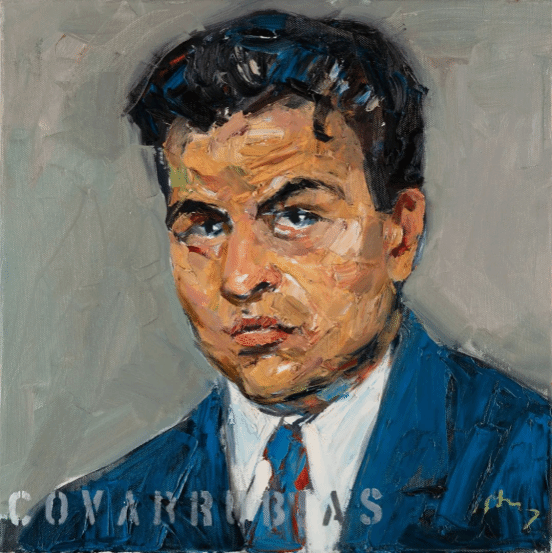
Portrait of Covarrubias, Zheng Shengtian, Oil Painting, 41×41cm, 2010
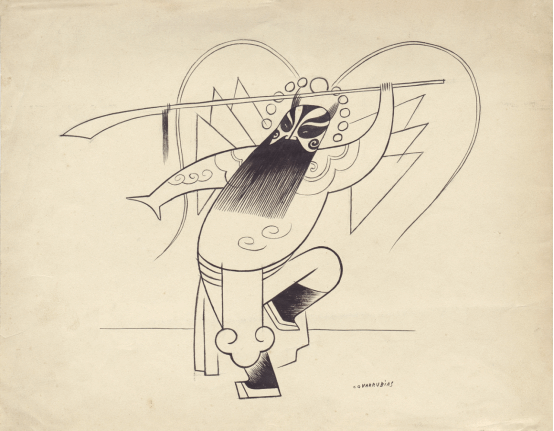
Chinese Opera Characters, Miguel Covarrubias,
published in MODERN MISCELLANY Vol. 5 No. 4, 1933
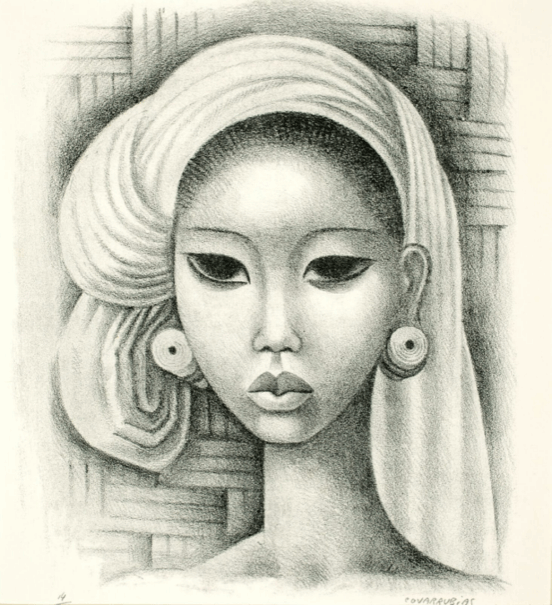
Head of Balinese Girl, Miguel Covarrubias, lithograph on paper, 11×9cm, 1930s,
Image Madison Museum of Contemporary Art, California
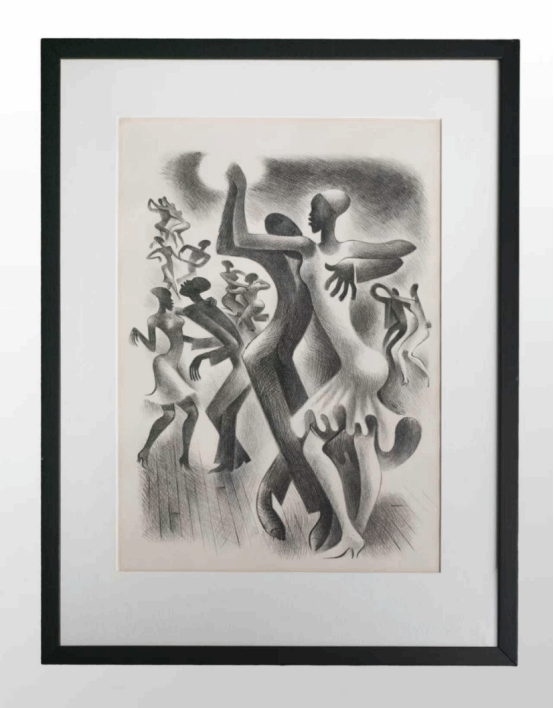
Harlem, Miguel Covarrubias, Lithograph, c. 1939, Courtesy of the Robert Brady Museum, Mexico
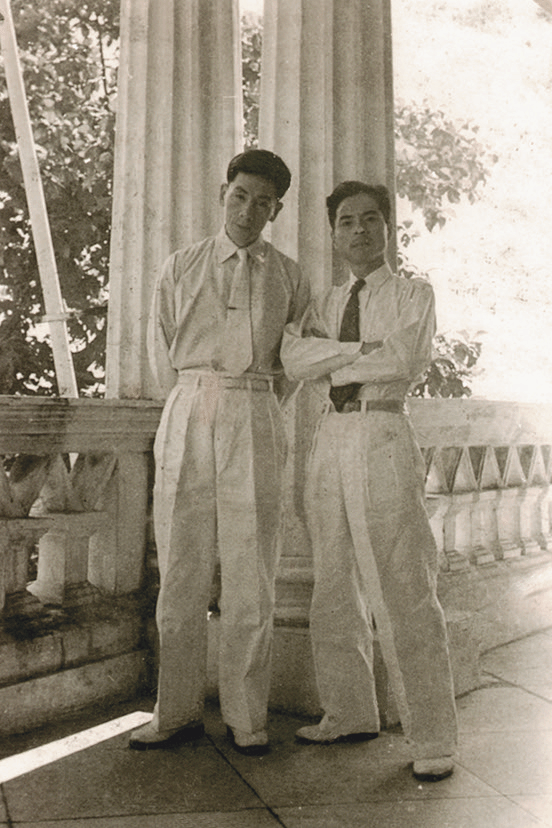
Wang Lanruo (standing taller) and Guan Shanyue, Penang, Malaysia, 1947
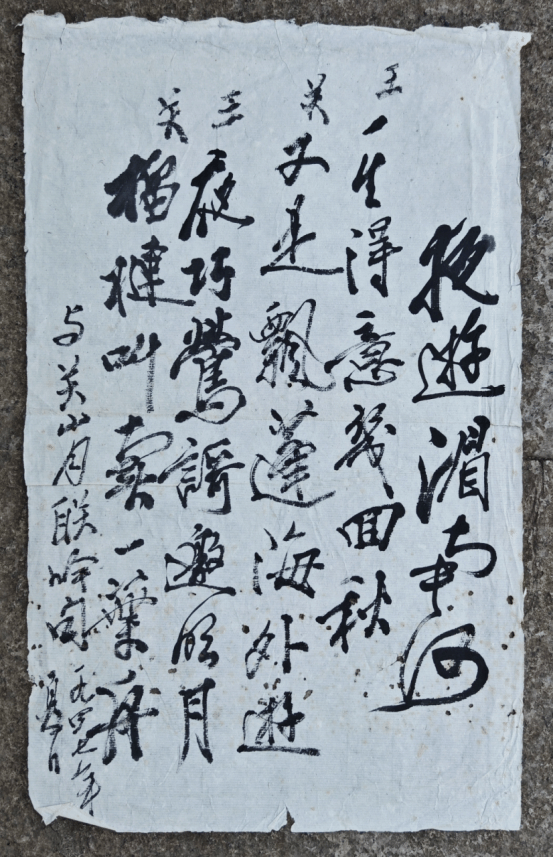
Evening Tour on the Chao Phraya River, Wang Lanruo,
Calligraphy, Ink on paper, 33×21 cm, 1947
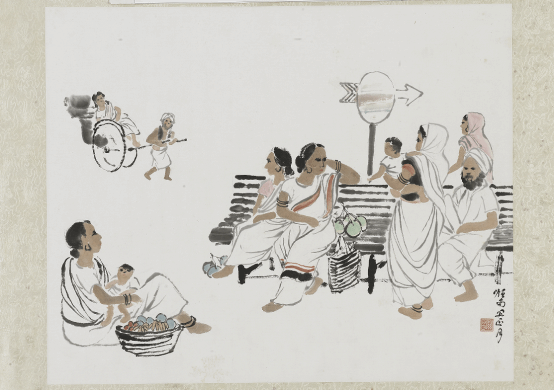
Nanyang Figures Sketch No. 3, Guan Shanyue,
Sketch on paper, 47.3×58.5cm, 1948, Collection of Guan Shanyue Art Museum, Shenzhen
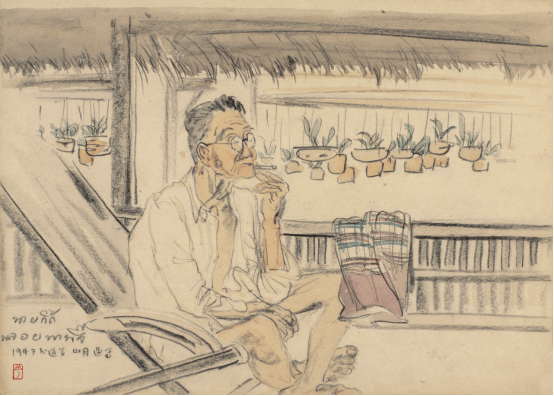
GUAN Shanyue Thailand Sketchbook No. 15,
Sketch on paper, 28×38.2cm, 1947, Collection of Guan Shanyue Arts Foundation
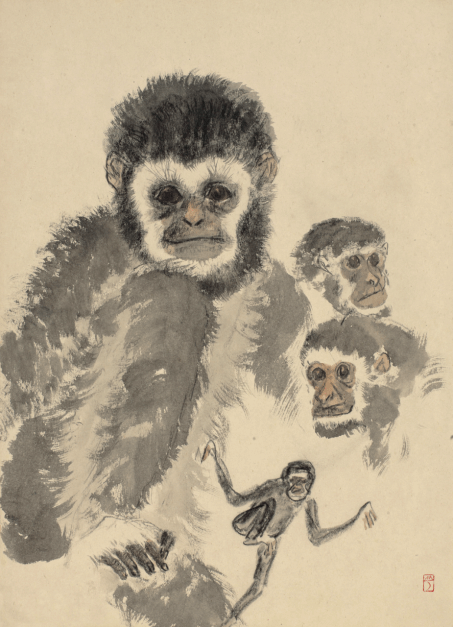
GUAN Shanyue Thailand Sketchbook, Sketch on paper, 28×38.2cm, 1947,
Collection of Guan Shanyue Arts Foundation
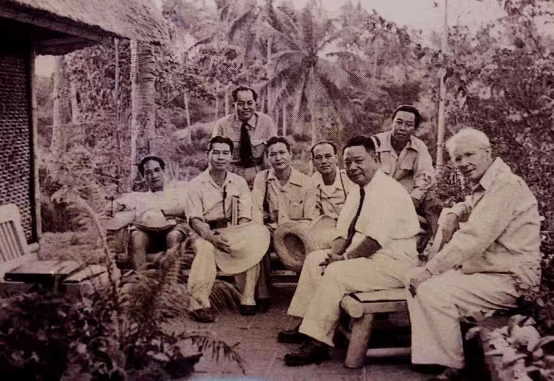
Nanyang artists from the pioneer generation touring Bali with friends.
(from left, seated) Chen Wen Hsi, Liu Kang, Cheong Soo Pieng, Luo Ming,
Chen Chong Swee and Zhou Bichu at Rudolf Bonnet's house, Bali, July 1952. (SPH Media)
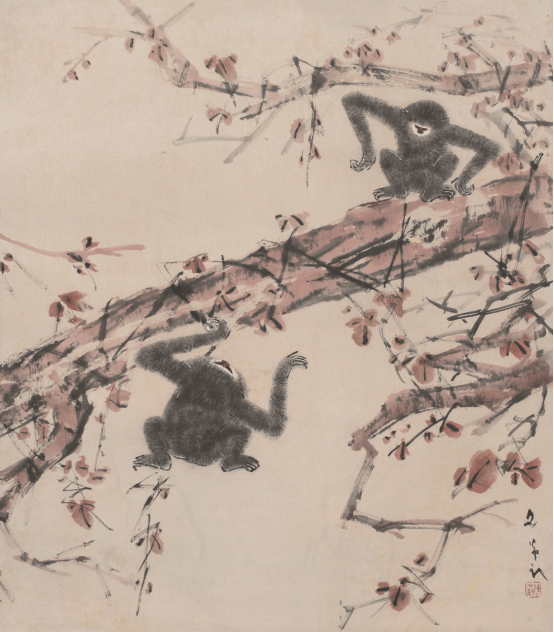
Two Gibbons, Chen Wen Hsi, Ink and color on paper, 58×67cm, Collection of Yang Xiaohong
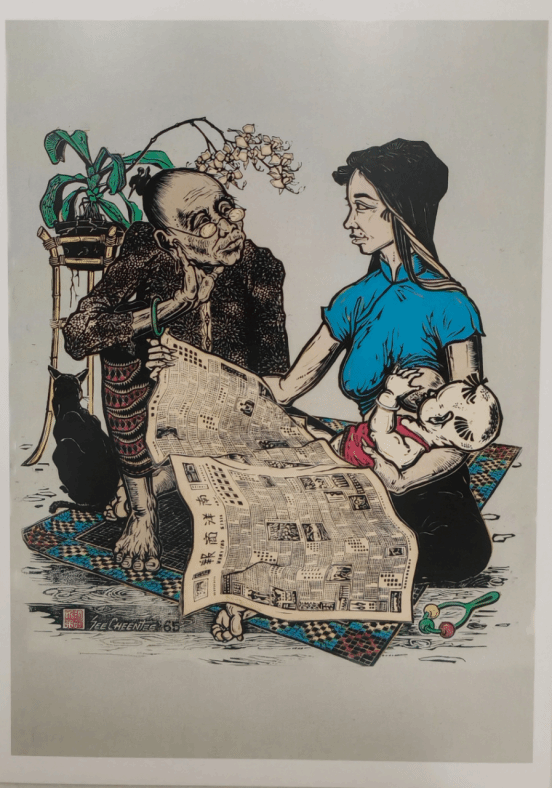
Three Generations, See Cheen Tee, Color woodblock print, 62×49cm,1965,
Collection of See Yee Wah
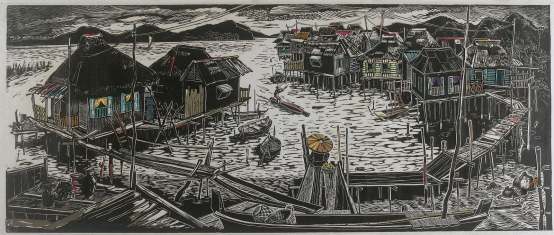
Three Generations, See Cheen Tee,
Color woodblock print, 62×49cm,1965, Collection of See Yee Wah
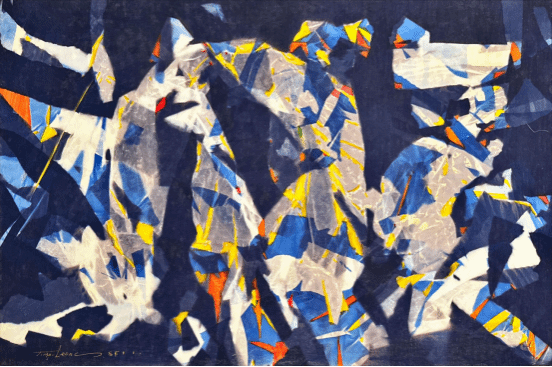
Stone Flower Series No. 1, Tay Mo Leong, Batik, 60×89cm, 1975, Lee Khai Collection
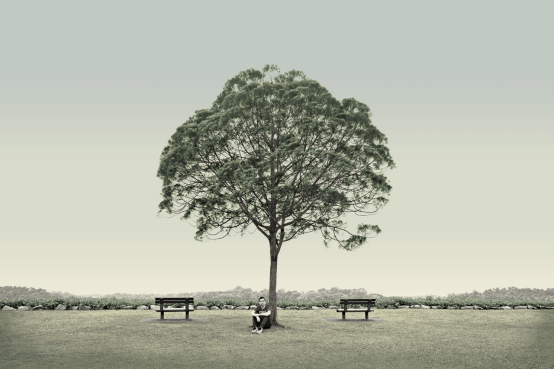
The Wedding Tree, Seletar, From the series Singapore, Very Old Trees (No.24),
Robert Zhao Renhui, Photographic work, 111×74cm,2014
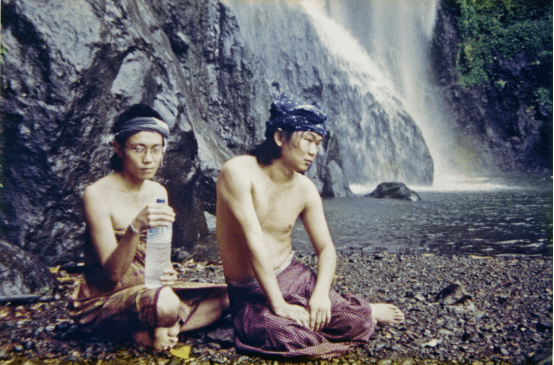
Two by the Waterfall, The Artists Village, 73×95cm, 2001
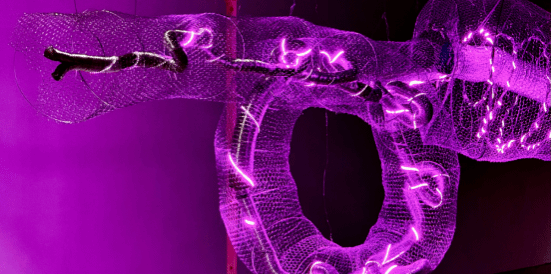
MacBoCage, Tan Kwank Liang, A large-scale installation commissioned for this exhibition,
Mixed media (Metal, wood, neon tubes, and ink on paper)
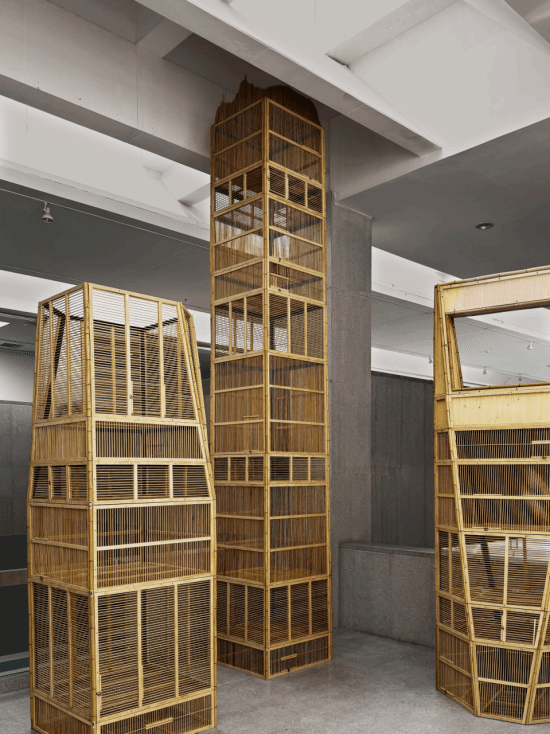
Untitled, Rirkrit Tiravanija, Bamboo and steel installation, 97×97×560cm; 77x77x760cm, 2010
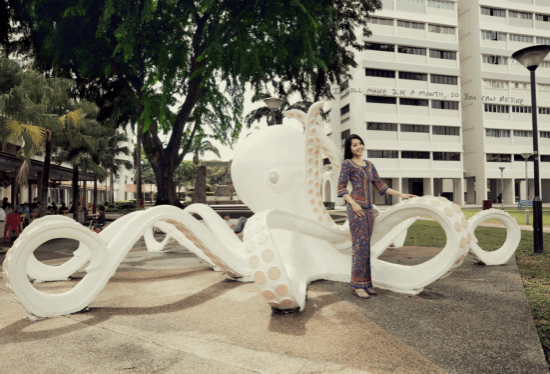
The Land of My Heart, John Clang, Photography, 101.6×149.7cm, 2014
